


Food Is the Map to Home
A System-Wide Approach to Heritage, Community, and Experience

Good morning.
All of us in this room are the same. We are custodians of Appalachia, protectors of West Virginia, and together we tell the tale of our hills & hollers.
As superintendents, you’re responsible for protecting some of the most important places in West Virginia. You’re stewards of land, history, and public trust.
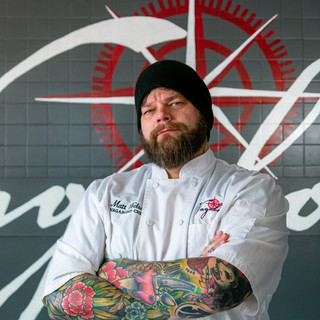
My role, as Executive Chef for the Parks, is a little different, but it connects directly to yours. My job is to make sure that when people eat in these places, the food lives up to the landscape.
As cornerstones of our communities, West Virginia State Parks have a responsibility to support local food. And as champions of this state, our mission isn’t just to preserve the land—but to preserve our heritage.
To put it simply:
Food is the map to home.
Food tells people where they are. It tells them who lives here. And it tells them whether this place has a story worth remembering.
This matters to every park in this room—whether you have a kitchen or not.
Stewardship Beyond the Landscape
When we talk about stewardship, we usually mean trails, forests, buildings, and facilities. And all of that matters deeply.
But stewardship isn’t only about land -- it’s about culture.
Every park, regardless of size or amenities, is a cultural touchpoint. Visitors don’t just experience the view; they experience the feeling of a place. And food -- whether it’s a meal, a product, or a story -- is one of the strongest ways people connect to place.
Even if your park doesn’t serve food, you still serve people.
West Virginia has food traditions that only make sense here. Traditions shaped by our geography, the seasons, scarcity, ingenuity, and community. We are uniquely positioned to carry these stories forward -- to honor their roots, and to cultivate them as they grow into the next generations.
Cellar-to-Table Dinners We work towards this mission in several ways. I’d like start by talking about our Cellar-to-Table dinner series.
Cellar-to-Table focuses on value-added, shelf-stable foods, the kind you’d find in your root cellar: jams, pickles, syrups, grains, spice blends, cured meats, baked goods. I launched this series last year to support products like these made in our state and to further the preservation of this tradition that used to be a matter of course, but in this time of unprecedented convenience, has begun to gather dust.
With the Cellar to Table Dinners, we use the same mindset we apply when we restore a historic cabin or protect a cultural site.
This series tells a story -- our story -- through the dishes and presentation we celebrate what makes us unique and what makes us who we are. In some ways, these dinners are an outreach program not only to our visitors from out-of-state, but to our neighbors removed from this tradition of subsistence.
These dinners also give us the opportunity to form partnerships with local makers. Keeping our economy hyperlocal is sadly not a tradition in WV, but I think it’s one we should start right here and now.
When our guests see these local products, they’re moved to take a piece of it home, and they can have that opportunity through our gift shops. People are far more likely to buy a story than a souvenir. A jar of local apple butter with a story attached carries more meaning than some commodity item grabbed off a nameless shelf in a forgettable store made who-knows-where.
These dinners are also an opportunity to build community relationships. Parks are a place to gather. We may be off the beaten path, but we are the heart of our communities.
Cellar-to-Table gives all of us a way to support local economies, preserve Appalachian foodways, and tell the story of place.
Farm-to-Table Dinners
While our Cellar to Table series occurs in the late winter and early spring, our Farm-to-Table dinners bookend our year with another dinner series to celebrate the hard work and diversity of goods available in the state.
At its core, Farm-to-Table is about seasonality, honesty, and connection to the land. It’s menus driven by what’s available -- not only what’s convenient.
These dinners aren’t about being fancy. They’re about being honest about what grows here.
Farm-to-Table Dinners are fresh and vibrant; they support farmers, strengthen rural economies, and create destination experiences that draw people into our parks across WV.
Both of these dinner series work as a statewide dining event. They’re something people travel for. Last year I had some guests who came to multiple dinners, and a couple groups made it a point to come to every single one. That provides an experience that lives far beyond the meal.
We need this kind of visibility. It’s important in the modern day to be “Instagram-worthy.” We already have the vistas, now we have the plates.
Storytelling: The Missing Ingredient
Whether it’s one of our dinner series or the way we have begun to work local lore and heritage into our menus, every flavor tells WV’s story. This is where everything comes together.
People don’t remember recipes. They remember stories.
They remember the name of a farmer. They remember why a dish exists. They remember how food connects to the land around them.
And storytelling doesn’t require a microphone or a long speech.
Sometimes it’s one sentence on a menu. One name spoken out loud. One staff member who can answer “why.”
When we tell food stories well, guests linger. They ask questions. They post photos. They come back. They talk. They begin to tell the stories -- both of their experiences and those they learned from us.
Food is the map to home because it helps people understand where they are—and why it matters.
A Unified Effort
For this work to continue and grow, we need a unified effort. Just as we are all stewards of this land and culture, we are all tellers of these stories.
Together, we move the needle. And together we reach our destination.
Not everyone has to do everything.
Start with one dish. One partner.One story.
That’s enough.
We protect the land. We serve the public. And through food, we keep our heritage alive.
Food is the map to home.
Let’s make sure it leads back to West Virginia.
Thank you. Chef Matt Welsch - AKA The Vagabond Chef


The line about making sure the food lives up to the landscape really stuck with me—it's such a grounded way to connect state parks, local farms, and Appalachian heritage. I also love how you framed superintendents and the chef as different kinds of stewards working toward the same goal. By the way, I keep a free AI prompt library and generator I like to share: https://nanoprompts.net/
Excelente artículo sobre cómo la gastronomía conecta la cultura y la comunidad. La forma de preservar tradiciones locales inspira a descubrir historias únicas de cada lugar. También encuentro interesante la loteria nacional como referencia para compartir experiencias auténticas y memorables.
I spent some time browsing the interface, and it’s very well balanced. It’s simple yet informative, and switching sections is smooth.
I had a quick look at the interface, and it left a good impression. Clean layout, easy navigation, and nothing feels out of place.
After going through the interface, I found it really intuitive. It’s not too busy, and everything seems to be right where you expect it.