


Build a Bigger Table
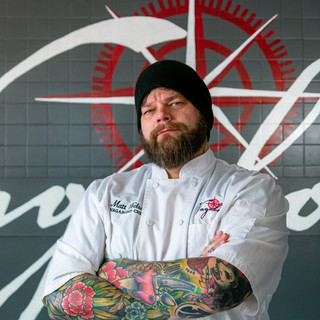
In this, the day of manufactured outrage, it’s more important than ever to remember our roots.

I grew up in the Northern Panhandle of West “By God” Virginia. Deep in the hills and hollers, but not far from the river that forms our Northwestern border. The Ohio River and the industry that she supports add a different flavor to Appalachian Culture in the Upper Ohio Valley. All too often, Appalachia is confused with the South. While we do share some culture with a strictly Southern heritage, Appalachia stretches from the Deep South all the way up into New England. We are far too diverse to be pigeon-holed. Especially coming from West Virginia, a state defined by its opposition to the South.
When I was a kid, my family struggled financially. We didn’t grow a garden as a hobby; we grew it for sustenance. My old man didn’t deer hunt for fun. He hunted to put food on the table. I grew up on a dairy farm outside of Limestone, WV, off of Route 250, a road sure to make you lose your biscuits—especially if you were sitting in one of those rear-facing Buick station wagon bench seats.
Most of the world doesn’t understand Appalachia. The US at large lumps us into unsubstantiated stereotypes, faint echoes of embarrassment. They do this because it’s much easier to turn marginalized communities into caricatures, and because we are, or at least were, a people to be reckoned with. West Virginians are punk rock. We were DIY before it was a trend. We survive in harsh climates, cut off from modern conveniences. Even today, much of our state goes without cell service or internet access.
Not to paint too rosy a picture; we have our blemishes. I’m looking at you, Jesco. We need to learn from the past as we move into the future—learning what not to do is just as vital as the rest.
When my family was amidst our most troubling times, it was our family, friends, and neighbors who showed up. We all did when it was our turn. Each for one another. If you had, you gave, and if you needed -- well, you put your hat in your hand, and you accepted charity with a lump in your throat and an oath to pay it forward. It didn’t matter where you were from or what you believed. We came together because we lived together. That’s community.
I often say that Appalachian Culture did not die on Blair Mountain in 1921. We have continued to grow and evolve. West Virginians are citizens of the world, but the Battle of Blair Mountain exemplifies one thing we’d do very well to remember today.
Since before we were even a state, these ancient mountains have been raped and pillaged by outsiders with money and power. They mined resources using our people and tossed them aside. Leaving behind miners with black lung, mountaintops thrown into rivers, all the while rubbing their clean, soft hands together, insulated from the consequences.
During the Coal Wars, West Virginians came together in that tried-and-true Appalachian way. United by a common goal: survival.
If the Devil’s greatest trick was convincing the world he didn’t exist, then his second greatest was convincing neighbors they weren’t on the same side. Demonizing folks who don’t think like us, don’t look like us, or don’t vote like us doesn’t help anyone but those taking advantage of us. It’s not only un-American. It’s un-Appalachian.
Everyone deserves to eat good food. And the bigger we have to build the table, the better. Nature abhors a monoculture, and so should we.
When I chose to put Vagabond Kitchen in Downtown Wheeling, I did so because I believe that downtown is the heart of a community. Growing up, it always felt like the kitchen was the heart of the home, and I wanted my place to be the heart of our community. Vagabond Kitchen should be a true gathering place, like old-school public houses or “pubs.” In modern parlance, we call it a “third space,” but regardless of the terminology, I want Vagabond to be a place where people come together. All people. All are welcome.
Together we are greater than the sum of our parts. That’s what it takes to get through the day’s struggle. A brighter future is ours, but only if we can work together to achieve it.
Thank you. Chef Matt Welsch - AKA The Vagabond Chef


Virtual support can be especially useful when a business is growing and administrative demands increase. Virtual Assistance in Austin, TX is a helpful resource for exploring ways to manage that workload.
This is a helpful resource for businesses planning concrete work in the Atlanta area. Comparing commercial concrete contractors near me based on experience, communication, and project requirements seems like a smart approach.
This article is helpful for prospective homeowners who may not know exactly where to start with mortgage planning. Getting organized early can make the rest of the buying process much smoother. Readers interested in Mortgage Lending Services in Richmond, VA may appreciate having professional guidance when reviewing financing possibilities and preparing for homeownership.
There is something important about community that goes beyond simply bringing people together in the same place: it also depends on people being willing to share experience, support one another, and make room for different perspectives. The point about neighbours helping each other during difficult times is especially relevant today, when many people are connected online but can still feel quite isolated in their everyday lives. In professional communities, the same principle applies because experience is often most valuable when it is shared rather than kept within a small group. For example, people working toward professional recognition can benefit from hearing how others handled challenges, prepared their evidence, or approached formal reviews. Resources such as ice communications reviews can be useful…
I appreciate the practical information provided about Pakistani Clothing Wholesale. There is a wide range of Pakistani fashion available, from everyday outfits to formal and festive clothing. Retailers need variety when serving different customer preferences, so having access to multiple styles can be a real advantage. This article gives useful insight for businesses considering Pakistani clothing as part of their product range.