


RIDGE & ROOT RECIPES: GRANDMA MARY'S CABBAGE & POTATOES


LET'S TALK TECHNIQUES!
Grandma Mary's soup is both wildly popular and amazingly simple. It's fitting that this technique lives on the blog, because Grandma didn't believe in recipes either. I once asked her for the recipe for her baked beans, and she looked at me like I'd spilled her homebrewed beer. What I got instead was a list of ingredients with measurements somewhere in the pinch, dash, and smidge range. I appreciate that a lot more now than I did then.
The ingredients in cabbage and potatoes are, in addition to the two in the name: ham, carrots, celery, onions, stock, and salt and pepper, the spices, not the band, that's Salt-N-Pepa. And one secret ingredient.
Start by cubing up some ham. Discard the especially fatty bits and any loose skin. Once you've got clean cubes, put them in a skillet over medium heat and render them. Cooking off the excess liquid, and there's a lot in a typical ham, gives the cubes better texture and better flavor once they hit the soup.
While the ham renders, chop your mirepoix, the fancy French name for carrots, celery, and onions, the base for most soups in one form or another. I like a slightly heavier ratio of onion, maybe fifty percent more onion than carrot or celery.

In your soup pot, sauté the mirepoix in oil or butter over relatively high heat. Add salt and pepper. While that's cooking down alongside the ham, chop up your potatoes. I like red potatoes with the skin on, but any potato works. Cut them about the size of your ham cubes. Then cut your green cabbage, leaving the pieces on the larger side. They'll break down plenty in the pot and hold up better that way.
The ham should be sizzling by now. You want to cook off the water it releases and get some real browning on it. Once the water's mostly gone, before the pan gets too messy, pull it off the heat and set it aside.
The mirepoix will brighten first, then leach its own water. Cook that off the same way. Watch the onions go translucent, then everything will start to brown and stick to the bottom of the pot. Unlike the ham, you actually want some sticking here, a nice deep brown, no darker. Scrape the bottom as you stir to work that caramelization back into the pot.

When you hit that point, have some white wine ready, not for you, though a small pour never hurt anybody. Add just enough to cover the bottom of the pot. This deglazes it, lifting all those browned bits back into the liquid. Deglazing is one of the most useful tools in cooking, worth learning well beyond this one soup.
Before the wine cooks off completely, add your stock, leaving room for the ham, potatoes, and cabbage still to come. You can always add more later if you need it. Add the potatoes before the stock gets hot, not after. Potatoes cook more evenly starting from cold water; starting them in hot liquid leaves you with mushy outsides and a dry, pasty center.
Bring everything up to a boil and cook the potatoes. Once they start to soften, add the cabbage and the ham back in and let it all come together for a while.
Now the moment of truth. Taste the broth, just a spoonful, not a hunk of cabbage or potato, or you'll burn your mouth and taste nothing. Adjust for salt, pepper, and citrus.
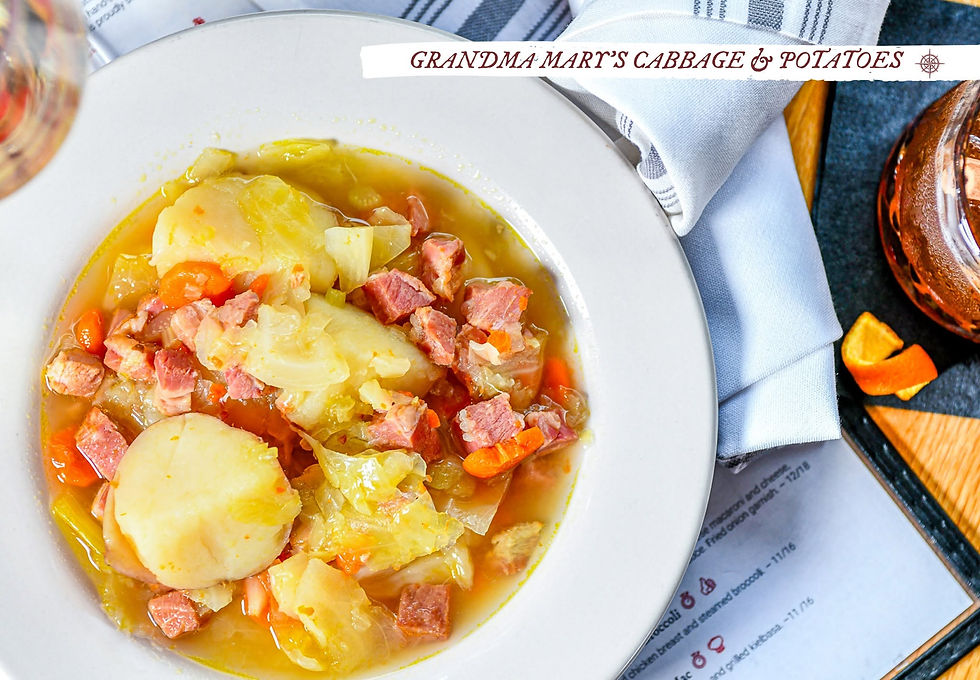
Citrus, you're asking? The acid in citrus, same as vinegar or tomato, brightens a soup up. It's the difference between "that's pretty good soup" and "eureka." You don't need much. In a gallon of soup, a tablespoon might be plenty, and you're not trying to taste lemon specifically, though lemon tends to complement this particular soup better than lime or orange would.
Take your time. A little salt, less pepper, a little citrus, tasting in between each addition. Get a second and third opinion if you can. When I first started making soups at Galena Lodge, I used to run down the line after people with spoons just to get a read.
You'll hit a moment where you go, "Damn, that's good soup," almost in disbelief. I know because it's happened to me hundreds of times. If it takes you a minute to get there, don't worry, you will. Trust me, trust yourself, trust your gut. This is a simple recipe, genuinely hard to screw up. Have fun with it.
To make it vegan, swap in veggie stock and beans for the ham. I'm sure it's still awesome. Actually, that sounds good enough I might make it that way soon. Maybe throw in some mushrooms while I'm at it.
If you just want the shorthand: render the ham, sauté the mirepoix with salt and pepper, deglaze with white wine, add stock and potatoes, bring it to a boil, add the ham and cabbage back in once the potatoes are tender, let it all cook together at least fifteen minutes, then adjust for salt and citrus. Enjoy.
And don't forget to thank Grandma Mary.
-- Chef Matt


This was a good read. I found the information useful and easy to follow. I also stumbled upon CroreBet while browsing different websites. Thanks for sharing your thoughts!